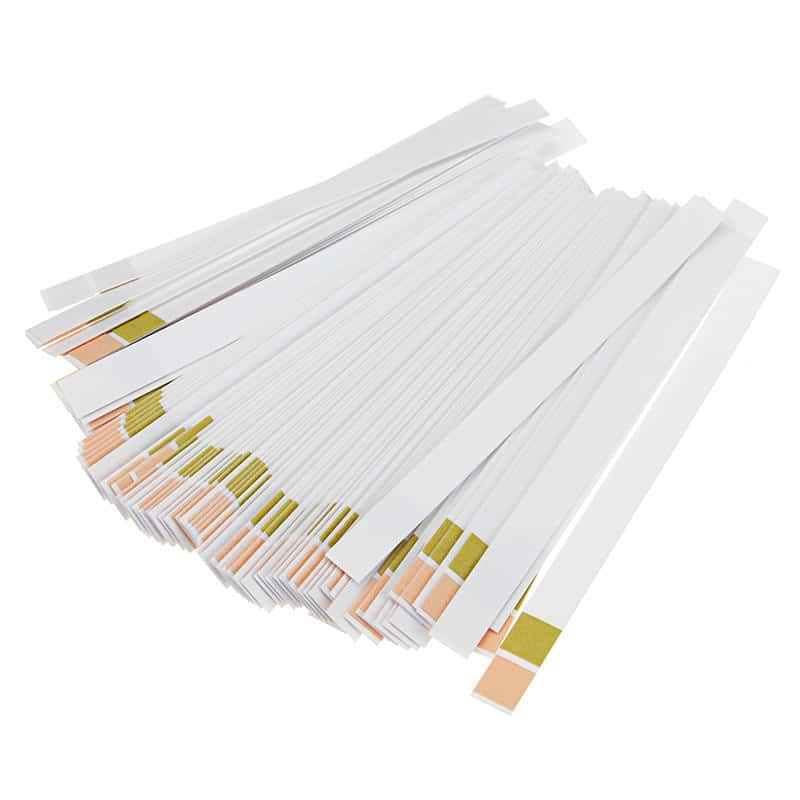
A result that takes 30 seconds can still prevent a costly hold, a failed hygiene check or an avoidable product complaint. That is where test paper applications in food manufacturing remain highly relevant. In busy production environments, test papers give QA and QC teams a practical way to verify key parameters quickly, especially when a full instrument-based test is not necessary for every decision.
For many food manufacturers, the value is not just speed. It is the ability to put a simple, low-cost control point directly into routine operations, whether that means checking pH during processing, confirming sanitiser concentration in a hygiene regime or screening for residues after cleaning. Used correctly, test papers support faster decisions on the factory floor and add another layer of confidence between scheduled laboratory analyses.
Where test paper applications in food manufacturing fit best
Test papers are most useful where the question is clear and the acceptable range is already defined. A production team may need to know whether a wash solution is still within working strength, whether a product stream is roughly on pH target, or whether a surface is free from detectable cleaning chemical residue before changeover. In these cases, a rapid visual indicator is often enough to trigger action.
That does not make test papers a substitute for calibrated instrumentation or formal laboratory methods. In regulated food production, they are better understood as screening and verification tools. They help teams spot drift early, check that a process is under control and decide when a more precise measurement is needed.
This distinction matters. A pH paper can confirm that an acidified product is broadly where it should be, but if a critical limit demands tight tolerances, a calibrated pH meter remains the correct tool. The same principle applies to sanitiser checks. Test paper can show whether concentration is likely to be in range, while titration kits or other validated methods may still be required for formal records, depending on the application and site procedures.
pH control in ingredients, process streams and finished products
One of the most common test paper applications in food manufacturing is pH checking. This is particularly relevant in dairy, fermented products, sauces, beverages and prepared foods, where pH affects flavour, texture, microbiological stability and process performance.
In dairy processing, for example, pH changes can indicate whether fermentation is progressing as expected or whether a cleaning step has left an alkaline carryover in a line. In wider food production, pH papers are often used for incoming ingredient checks, quick in-process spot checks and line-side troubleshooting when operators need an immediate indication before escalating to laboratory confirmation.
The trade-off is resolution. Broad-range pH paper is useful for fast classification, but it may not be suitable where a narrow operating window affects safety or legal compliance. Narrow-range papers improve precision for specific applications, though even then, colour interpretation can vary between operators and lighting conditions. That is why clear work instructions and defined acceptance criteria are just as important as the consumable itself.
Sanitiser concentration checks in hygiene regimes
Cleaning and disinfection are central to food safety, but they only work as intended if chemical concentrations are correct. Too weak, and hygiene performance may be compromised. Too strong, and sites risk taint, material compatibility issues, unnecessary chemical spend and possible residue concerns.
Test papers are widely used to verify common sanitising solutions such as chlorine, quaternary ammonium compounds and peracetic acid, depending on the chemistry used on site. In practice, this allows hygiene teams to check diluted solutions at point of use, confirm that dosing systems are performing properly and support routine records during shift work.
This is especially useful in larger plants where multiple stations are making up cleaning solutions or where open plant and environmental equipment are sanitised frequently. A quick check with the correct test paper can help prevent inconsistency across departments.
Even here, context matters. Some sanitisers degrade quickly, and temperature, water quality and organic load can influence performance. A paper test may confirm concentration at the moment of sampling, but it does not describe the whole cleaning outcome. It should sit alongside broader hygiene verification, not replace it. A wide range of sanitiser test strips are available from our webshop peracetic acid, peroxide, QAC, Chlorine.
Residue checks after cleaning
Food manufacturers also use test papers to check whether cleaning chemicals remain on surfaces, utensils or equipment after rinsing. This is particularly valuable during product changeovers, allergen controls and pre-start inspections where residual detergent or sanitiser could affect product safety or quality.
The appeal is obvious. Residue test papers are straightforward, portable and easy to include in standard cleaning verification routines. For production teams, that means fewer delays waiting for central laboratory support on routine checks. For QA teams, it means a simple control that can be standardised across shifts and sites.
The limitation is that not all residues are detected equally, and not every cleaning regime is suited to a generic indicator method. Sites should select papers appropriate to the chemicals in use and validate them against their own procedures. A result only has operational value if staff know exactly what a pass or fail means in their environment.
Water and utility monitoring
Water remains a critical utility in food manufacturing, and test papers can support routine checks on process water, rinse water and utility systems. Depending on the product type and site requirements, teams may use papers to screen pH, hardness, chlorine or other parameters relevant to cleaning, ingredient preparation or equipment protection.
This is often where procurement teams see the practical advantage. Test papers are easy to store, simple to issue to operators and suitable for distributed testing across a site. They are particularly useful for checks that need to happen regularly but do not justify instrument deployment at every location.
For manufacturers running high-care areas or water-dependent processes, however, screening should not be confused with full verification. If the parameter is critical to food safety, shelf life or equipment integrity, a more controlled analytical approach may still be needed.
Why food manufacturers still rely on test papers
Despite advances in instrumentation, test papers continue to earn their place because they solve a different problem. They are immediate, accessible and operationally efficient. An operator can be trained quickly, a supervisor can verify a result without specialist setup, and a site can maintain frequent routine checks without adding substantial cost.
There is also a resilience benefit. In real production environments, teams need dependable backup methods. If an instrument is out for service, awaiting calibration or simply not practical on the line, test papers provide continuity. That does not reduce the importance of instrument maintenance – it strengthens overall control by avoiding gaps in routine verification.
For procurement and technical managers, the decision is rarely about paper versus instrument. It is about matching the method to the risk, the frequency and the action required. In many factories, the strongest system uses both.
Choosing the right test paper for the job
Selection should start with the application, not the catalogue description. The key questions are straightforward. What parameter is being measured, what range matters operationally, how will the result be used, and who will perform the test?
A broad-range strip may be fine for general troubleshooting, while routine process control often benefits from a narrower range and clearer colour graduation. Chemical compatibility also matters. The wrong paper in the wrong matrix can give misleading results, particularly in complex food systems with strong colour, fat content or residues that interfere with interpretation.
Storage and shelf life should not be overlooked. Test papers are consumables, but they are still analytical tools. Exposure to moisture, heat or poor stock rotation can affect reliability. Sites that treat them as controlled QC items rather than generic stores consumables usually get better consistency from them.
Training deserves equal attention. A test paper is only as useful as the method wrapped around it. Staff need a standard sampling point, consistent contact time, clear reading instructions and a documented response when the result falls outside tolerance. Without that discipline, speed becomes guesswork.
Building test papers into a stronger QC routine
The best use of test papers in food manufacturing is deliberate rather than incidental. They work well when built into SOPs, pre-operational checks, hygiene sign-off and in-process verification. They are less effective when used ad hoc without defined limits or follow-up action.
For dairy and wider food production sites, that often means treating test papers as one layer in a broader control plan that includes calibrated instruments, reference standards, environmental monitoring and documented corrective action. Suppliers with practical sector knowledge can help align the product choice with the process need, which is where specialist support from companies such as Labtek Services can make procurement more straightforward.
A simple test is not a simple decision if the consequences are serious. The real value of test papers lies in using them at the right point in the process, with the right expectation of what they can and cannot tell you. When that fit is right, they remain one of the most effective routine tools on the factory floor.
labtekservices
LABTEK Services is an independent company providing instrumentation and support services for laboratories across the UK and Europe. Established in 1987, we have the knowledge and experience of the specialist dairy & food lab environment to allow us to deliver quality instruments, at competitive prices, with an excellent support service.